
PixioDoc vs RxPhoto: Which Medical Photo Documentation App Fits Your Practice?
Aesthetic practice-focused photo documentation with guided capture, ghosting overlays, and marketing galleries
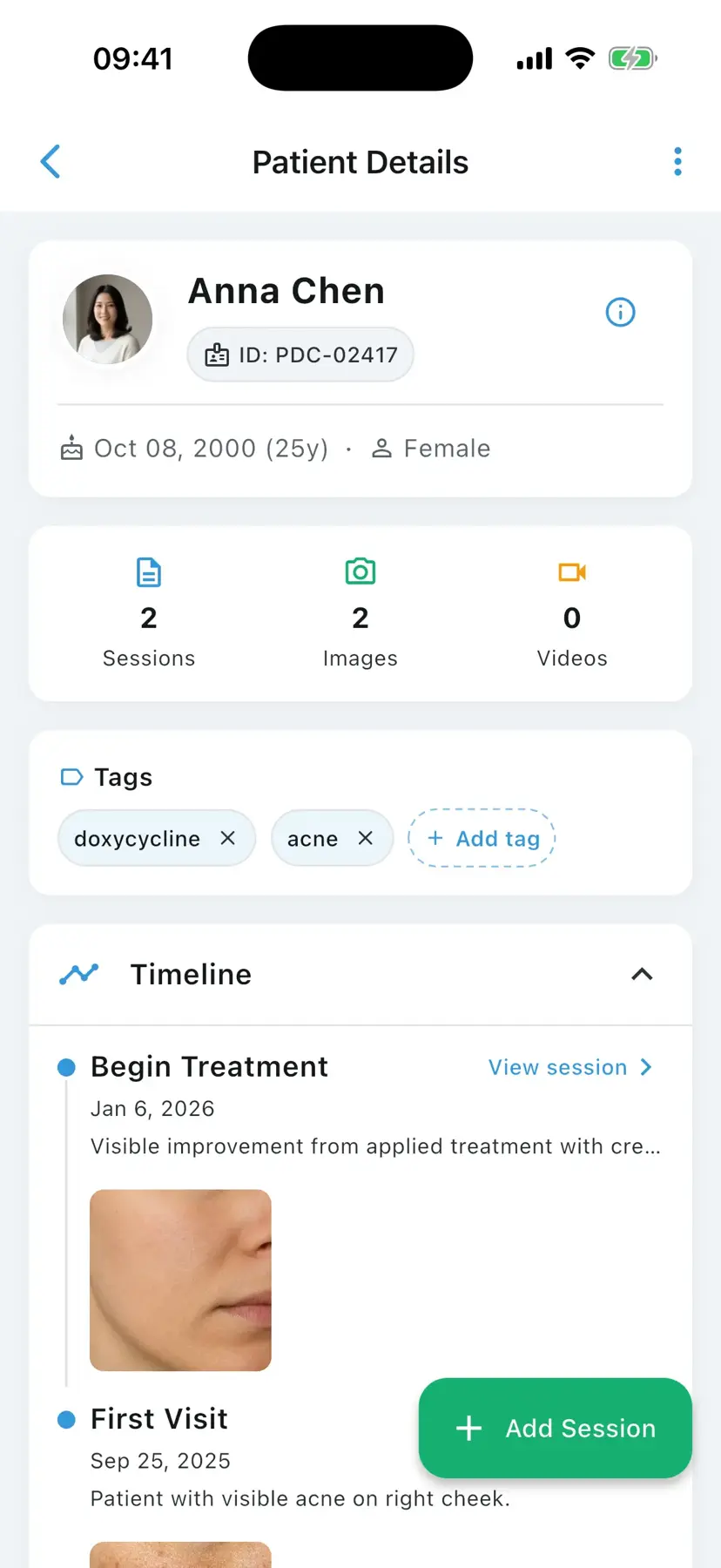
PixioDoc and RxPhoto are both medical photo documentation tools, but they fit different practices. PixioDoc covers dermatology, wound care, orthopedics, plastic surgery, and aesthetics, with public pricing from €8.99/month and PDF reports of selected photos on Pro and Teams. RxPhoto focuses on aesthetic practices and medspas, with guided capture, consent forms, and marketing galleries. It requires a demo and does not publish a price.
Feature-by-feature comparison
Target specialties
PixioDoc leads
PixioDoc. All visual specialties (dermatology, wound care, orthopedics, aesthetics, plastics)
RxPhoto. Aesthetic practices and medspas primarily
Free tier
PixioDoc leads
PixioDoc. Up to 10 patients and 5 sessions per patient, no time limit
RxPhoto. No self-serve free tier
Self-serve signup
PixioDoc leads
PixioDoc. Yes — download and start immediately
RxPhoto. No — requires demo/get-started call
Pricing transparency
PixioDoc leads
PixioDoc. Fully transparent (€8.99/mo Pro, custom Teams)
RxPhoto. Enterprise-oriented pricing, not publicly listed
Video comparison
PixioDoc leads
PixioDoc. Native video capture, compression, playback
RxPhoto. No video support mentioned
Ghost / guided capture overlay
Tie
PixioDoc. Adjustable ghost overlay (every plan)
RxPhoto. Available (ghosting overlays)
Consent forms
RxPhoto leads
PixioDoc. Not included
RxPhoto. Digital forms and consent built in
Marketing galleries
RxPhoto leads
PixioDoc. Not included (clinical focus only)
RxPhoto. Auto-synced before/after for marketing
Progress slider
Tie
PixioDoc. Interactive before/after slider (Free)
RxPhoto. Before/after comparison
Patient PDF progress reports
PixioDoc leads
PixioDoc. PDFs of selected individual photos (Pro and Teams)
RxPhoto. Marketing galleries — not clinician-selected clinical progress PDFs
Data hosting
PixioDoc leads
PixioDoc. Primary clinical data hosted in the EU/EEA; GDPR-aligned
RxPhoto. Primarily US-focused
Interface complexity
PixioDoc leads
PixioDoc. Simple, focused on clinical documentation
RxPhoto. Feature-rich (forms, notes, marketing)
| Feature | PixioDoc | RxPhoto |
|---|---|---|
| Target specialties. PixioDoc leads | All visual specialties (dermatology, wound care, orthopedics, aesthetics, plastics) | Aesthetic practices and medspas primarily |
| Free tier. PixioDoc leads | Up to 10 patients and 5 sessions per patient, no time limit | No self-serve free tier |
| Self-serve signup. PixioDoc leads | Yes — download and start immediately | No — requires demo/get-started call |
| Pricing transparency. PixioDoc leads | Fully transparent (€8.99/mo Pro, custom Teams) | Enterprise-oriented pricing, not publicly listed |
| Video comparison. PixioDoc leads | Native video capture, compression, playback | No video support mentioned |
| Ghost / guided capture overlay. Tie | Adjustable ghost overlay (every plan) | Available (ghosting overlays) |
| Consent forms. RxPhoto leads | Not included | Digital forms and consent built in |
| Marketing galleries. RxPhoto leads | Not included (clinical focus only) | Auto-synced before/after for marketing |
| Progress slider. Tie | Interactive before/after slider (Free) | Before/after comparison |
| Patient PDF progress reports. PixioDoc leads | PDFs of selected individual photos (Pro and Teams) | Marketing galleries — not clinician-selected clinical progress PDFs |
| Data hosting. PixioDoc leads | Primary clinical data hosted in the EU/EEA; GDPR-aligned | Primarily US-focused |
| Interface complexity. PixioDoc leads | Simple, focused on clinical documentation | Feature-rich (forms, notes, marketing) |
Clinical handoffs, not just marketing galleries
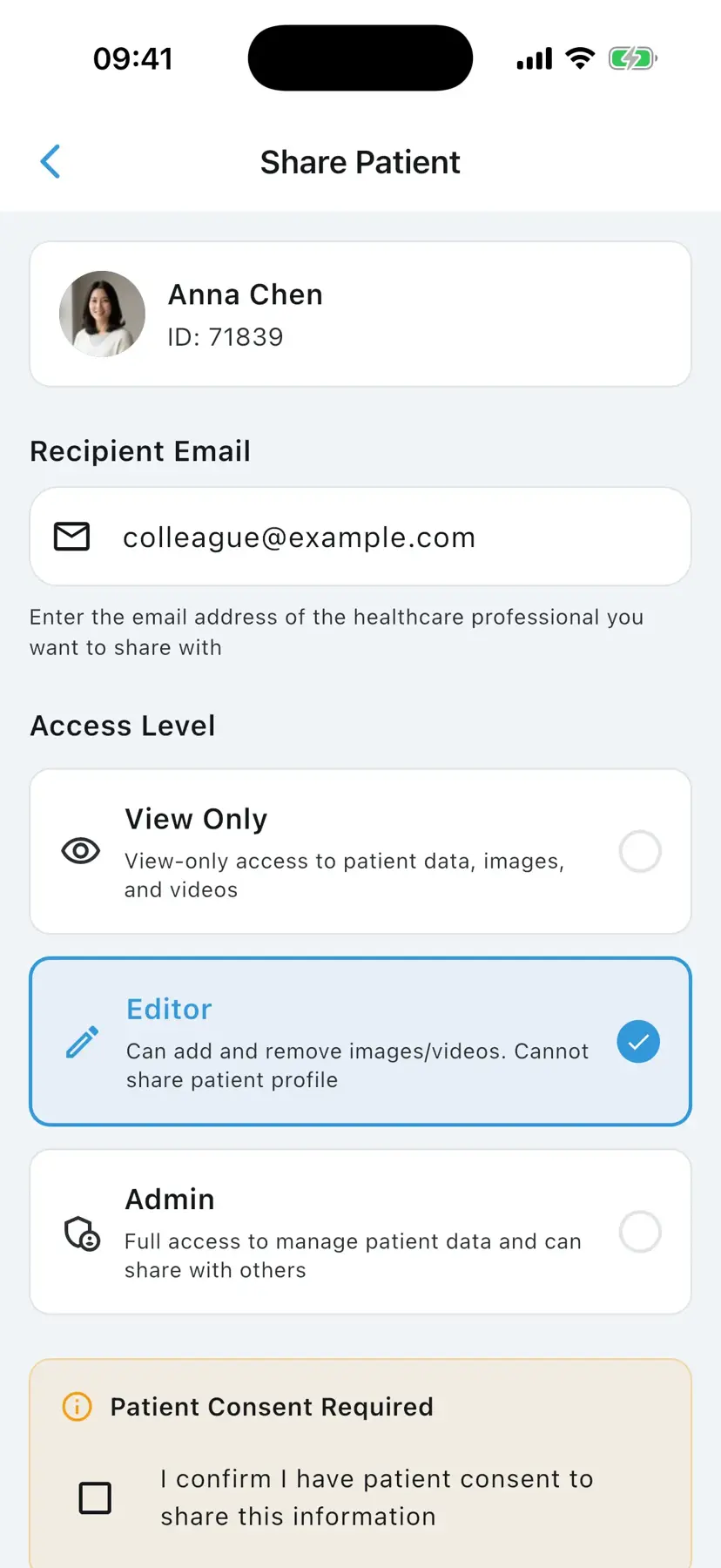
RxPhoto is strong for practice marketing and consent workflows. PixioDoc is built for the clinical record — compare progress in the room, share cases with colleagues, and generate clinician-curated PDF reports when a patient or referrer needs a takeaway.
- Self-serve signup with a free tier — no demo call required
- PDF progress reports from selected photos on Pro and Teams
- Role-based case sharing on Pro and Teams
Where PixioDoc excels
- Broader specialty coverage — dermatology, wound care, orthopedics, not just aesthetics
- Self-serve free tier — no demo call required, clinicians can start immediately
- Fully transparent pricing — know the cost before you sign up
- Native video support for documenting mobility and treatment dynamics
- PDF progress reports on Pro and Teams from selected individual photos
- Primary clinical data hosted in the EU/EEA, encrypted, with audit trails
- Simpler, focused interface without the learning curve of feature bloat
Where RxPhoto excels
- Built-in digital consent forms streamline intake workflows
- Marketing gallery feature auto-syncs before/after photos for practice promotion
- Designed specifically for aesthetic practices with their unique workflow needs
Common questions about PixioDoc vs RxPhoto
Try PixioDoc free
Up to 10 patients and 5 sessions each, including ghost overlay and the progress slider. No demo call.